Talk, Listen, Repair: The Gottman Way to Strengthening Your Marriage
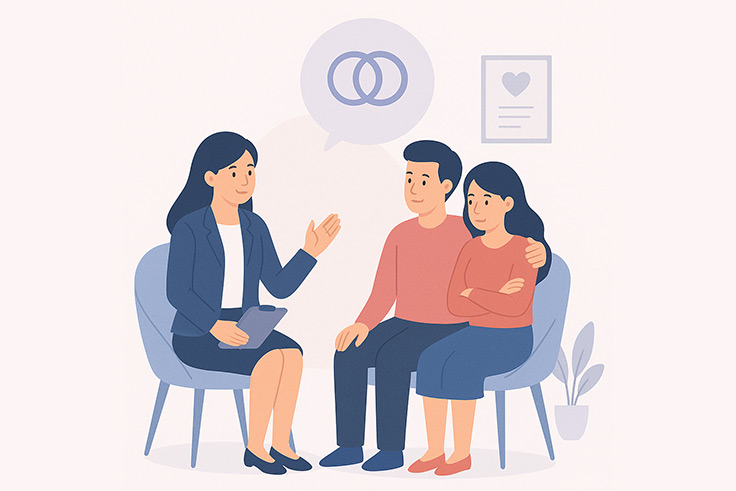
Marriage is a meaningful journey filled with love, joy, and the occasional challenge. Even the happiest couples face moments of disconnect, such as misunderstandings, a fading spark, or everyday stress. The Gottman Method offers a supportive, research-backed approach to help partners strengthen their connection, communicate better, and thrive together. Think of it as a practical roadmap for navigating the ups and downs of married life.
Meet Vyona and Jason
Vyona and Jason have been married for eight years and still care deeply for each other. But lately, the pressures of daily life have created distance. Minor disagreements, like dishes in the sink or time spent on phones, often lead to frustration. Their once regular conversations have faded, replaced by silence or brief exchanges. Both are left wondering why love alone doesn’t make things easier.
One day, after a particularly tense night, Vyona suggests they try couples therapy. Jason hesitates at first. “Are we really that bad?” he worries. But he also misses how things used to be. They decide to reach out for help not because they’re on the brink, but because they value their marriage and want to strengthen it, much like getting a tune-up before the engine fails.
Quick Tip
“One small habit that makes a big difference is scheduling a check-in time every day with your partner with curiosity and care.”
What Is Gottman Couple Therapy?
Entering the therapist’s office, Vyona and Jason feel nervous, but they’re quickly put at ease. Their counsellor is trained in the Gottman Method, a form of couples therapy developed by Dr. John and Dr. Julie Gottman after decades of research, the Gottman Method is a practical and effective approach to improving relationships. It focuses on helping couples communicate better, handle conflict with care, and rebuild intimacy and trust. Instead of taking sides or overanalyzing, it offers clear tools to strengthen connection and bring back warmth and understanding.
A key idea in Gottman Therapy is that strong marriages are built on deep friendship. Using the “Sound Relationship House” model, couples strengthen trust, commitment, appreciation, and healthy communication. When Vyona and Jason learn about this, they feel relieved. Their relationship is not broken. It just needs a stronger foundation. With the right tools, their connection can grow more solid and resilient.
Tools to Reconnect and Repair
Over the next few therapy sessions, Vyona and Jason begin learning and practising new ways to understand and support each other. These aren’t abstract theories. They’re concrete tools that feel surprisingly small but make a big difference. Here are a few of the Gottman-inspired tools that helped them reconnect:
- Love Maps (Knowing Each Other’s World): Vyona and Jason realised they’d stopped asking about each other’s hopes, worries, and daily experiences. Their therapist introduced “Love Maps,” which is a Gottman term for really knowing your partner’s inner world. The couple started setting aside time to ask simple questions like “How was your day, really?” or “Is there anything you’re anxious about this week?”As they rebuilt this habit, they felt closer, like best friends catching up rather than just roommates handling chores.
- Turning Toward Instead of Away: They discovered that Jason scrolling on his phone while Vyona talked was a missed opportunity. In Gottman therapy they learned about “bids for connection,” those small moments when one partner reaches out with a comment, a sigh, or a touch, and the other can either respond or brush it off. Jason saw that when Vyona said, “I’m so tired from today,” it wasn’t just a comment; it was a subtle plea for some comfort. He began to turn toward those bids, putting down the phone to give her a hug or a listening ear. Such little moments, multiplied over time, became warm threads weaving them back together.
- The 5:1 Positivity Ratio: Vyona and Jason were surprised to learn that lasting couples tend to have far more positive interactions than negative ones, with at least five to one, even during conflict. Their therapist encouraged them to increase everyday positive gestures: a morning kiss, a thank-you for doing the laundry, a compliment out of the blue. It felt a bit awkward at first, but soon these small acts sparked more smiles and softened the atmosphere between them. The more kindness and appreciation they shared, the less the occasional irritation mattered.
- Gentle Communication & “I” Statements: In sessions, Vyona realized that when she felt unheard, she would lash out with “You never listen to me!” which only made Jason defensive. The Gottman approach taught them a better way: complain without blame. Vyona practiced saying, “I feel lonely when I don’t get a response; I need us to talk in the evenings,” instead of attacking. Jason learned to listen and acknowledge her feelings before responding. This simple shift diffused many fights. They also picked up a lifesaver tip: if a discussion got too heated, either of them could call a short timeout to cool down, rather than say things they’d regret. By returning to tough conversations when calmer, they managed conflicts much more respectfully.
- Repair and Empathy: Perhaps the most heartwarming tool was learning to make repair attempts, little olive branches during or after a conflict. In one session, the therapist helped Jason express what’s beneath his irritation about the dishes (he felt unappreciated when coming home to a messy kitchen). It was hard for him to say that, but Vyona listened and understood. She reached out and said, “I get it, thank you for telling me.” That was a repair moment. They even found humor as a repair tool: once, in the middle of a spat, Vyona made a goofy face that made Jason laugh, breaking the tension. They learned that saying “I’m sorry,” giving a hug, or finding a light moment in an argument are not ways to avoid issues, but ways to remind each other “We’re in this together.” Empathy grew as they practiced seeing things from each other’s perspective.
With the help of Gottman tools, Vyona and Jason began to reconnect. Their problems did not vanish, but they started facing them as a team. Emotional distance eased as they opened up and felt safer sharing deeper feelings. Resentments softened with mutual effort. They also learned that some differences, like tidiness vs. relaxation, may always exist. Dr. Gottman’s research shows many conflicts are rooted in personality, not problems to fix. The key is navigating them with respect and humor. This shift helped them stop trying to win and start focusing on understanding.
Not Just for Couples in Crisis
One common myth about couple therapy is that it is only for relationships in deep crisis. But in reality, therapy can be a proactive and positive step. It is a way to invest in your relationship before problems grow. You do not need to be on the brink of separation to seek help. Even couples who are generally happy can benefit from learning new ways to communicate, manage conflict, and deepen their connection.
In Singapore’s fast paced lifestyle, many couples find themselves constantly juggling work, family, and responsibilities, leaving little time for each other. Gottman-based therapy offers a structured way to pause, reflect, and reconnect. It can act like a reset button for your relationship. As one therapist said, “Therapy is for strengthening relationships, not just salvaging them.” Think of it as regular maintenance, just like how you care for your health or your car. Seeking support is not a sign of failure. It is a sign of commitment.
Vyona and Jason admit that at first they felt a bit embarrassed seeking counseling. After all, marriage is supposed to be natural, right? But they quickly realized that asking for guidance is not a sign of failure; it’s a sign of commitment. It meant they cared enough to work on their marriage. Far from feeling shamed, they found the therapy space supportive and empowering. It became a weekly act of love, like date night but with a wise guide to help them grow. By the end, they wondered why they hadn’t done this sooner.
A Gentle Invitation to Connect
Every marriage has its ups and downs, and it’s perfectly normal to need support along the way. Vyona and Jason’s story shows how Gottman Method couple therapy can offer practical tools and renewed connection. If their experience feels familiar, take it as a sign that you do not have to wait for a crisis to seek help. Just like regular health checkups, relationships also benefit from care and attention to stay strong.
At Incontact , we have Gottman-trained therapists who would be honored to help you and your partner learn these tools and apply them to your own, one-of-a-kind love story. Whether you’re facing serious storms or just little clouds on the horizon, reaching out for help is a brave and loving step. Remember, couple therapy isn’t about judging or fixing you. It’s about giving you a safe space to grow together, with guidance grounded in decades of research and lots of heart.
Marriage can be hard work, but you don’t have to do it alone. With the right tools, and a little help, you and your partner can reconnect, repair past hurts, and even discover new depth in your bond. After all, every great love deserves a strong toolkit. If you’re curious to learn more or ready to enrich your relationship.
Ready to strengthen your relationship and grow together? Reach out to Incontact today
Submit a Comment
Your email address will not be published. Required fields are marked *
Recent Blogs
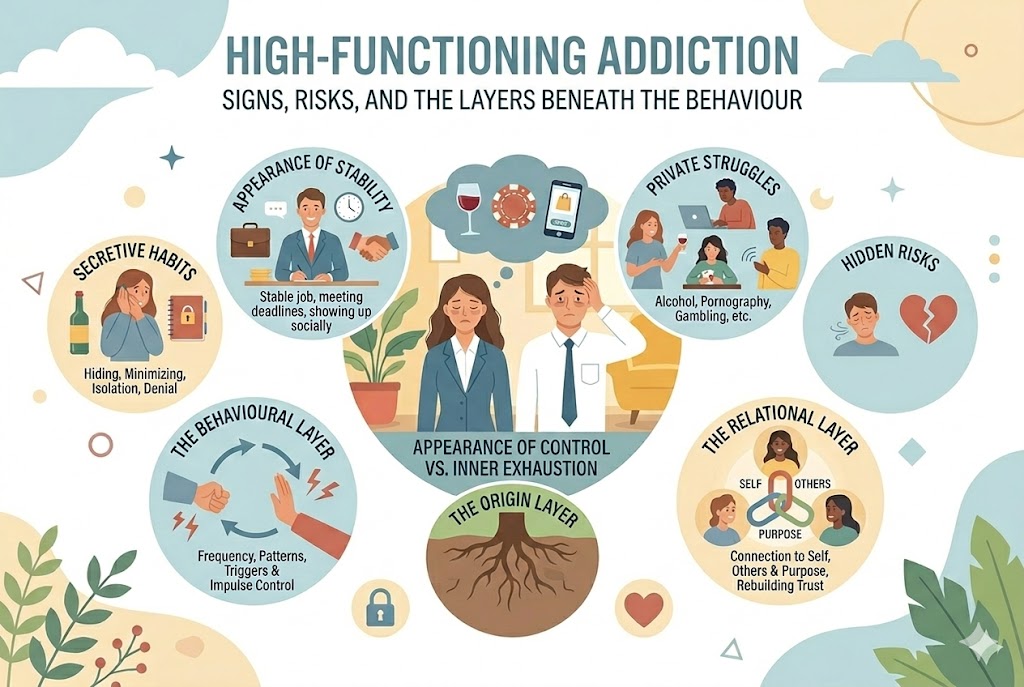
High-Functioning Addiction: Signs, Risks, and the Layers Beneath the Behaviour
5 March, 2026
Addiction isn’t always visible. Some individuals continue to work, parent, meet deadlines, and show up socially – all while privately struggling wi...
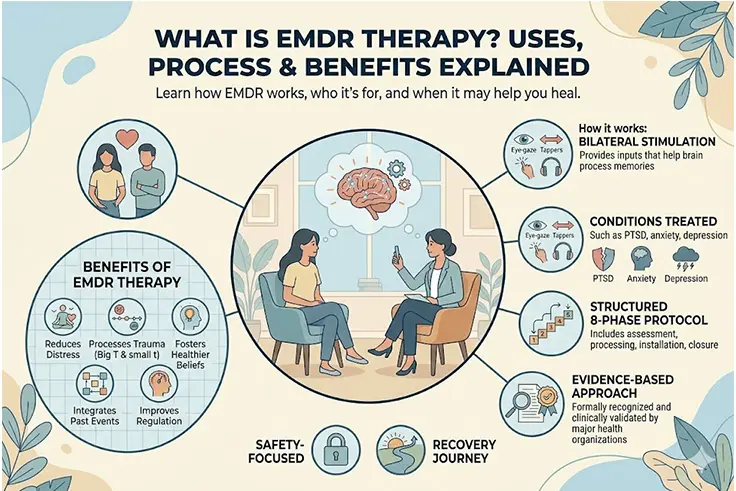
What Is EMDR Therapy? Uses, Treatment & Benefits Explained
2 March, 2026
What is EMDR therapy? EMDR (Eye Movement Desensitisation and Reprocessing) therapy is an evidence-based approach that helps individuals process and heal fr...
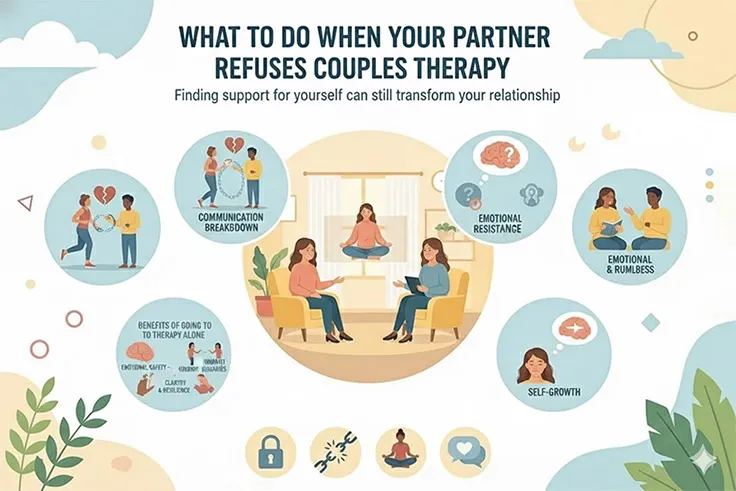
What to Do When Your Partner Refuses Couples Therapy
6 February, 2026
When a partner refuses couples therapy or a partner doesn’t believe in therapy, it can leave you feeling stuck, alone, and carrying the emotional weight ...

