What Is EMDR Therapy? 8 Phases of EMDR Treatment
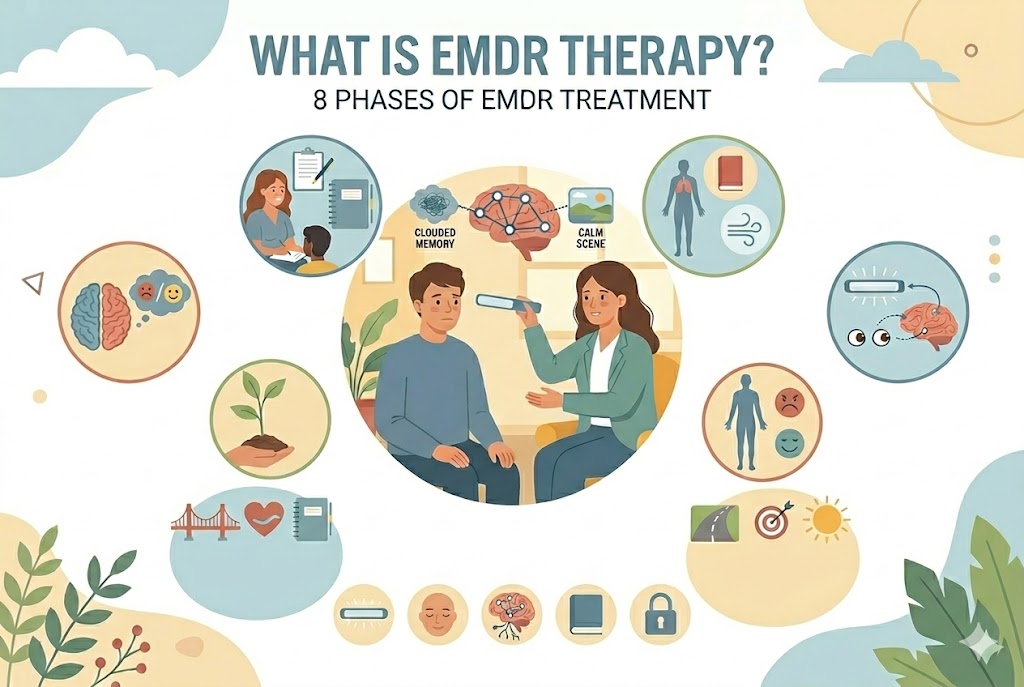
What is EMDR Therapy?
EMDR (Eye Movement Desensitisation and Reprocessing) therapy is a psychotherapeutic approach designed to alleviate the distress associated with traumatic memories. It involves guided eye movements to help reprocess and integrate traumatic experiences.

8 Phases of EMDR Treatment
EMDR therapy consists of eight phases. These phases occur over multiple sessions, with one session sometimes using parts of several phases. An example of this is that phases 1 and 2 typically occur only in early sessions, while phases 3 through 8 occur across multiple sessions later.
For a single disturbing event or memory, it usually takes between three and six sessions. More complex or longer-term traumas may take eight to 12 sessions (or sometimes more). Sessions usually last between 1 and 1.5 hours. The eight phases are:
1. History Taking & Treatment Planning
This part of the process involves your EMDR counsellor gathering information about you and your past. This helps determine whether EMDR treatment is appropriate and safe for you. You will also identify specific memories or situations you want to work on. Goals for therapy are discussed and clarified.
2. Preparation and Education
During this phase, your counsellor will discuss what will happen during EMDR sessions and what you can expect. They’ll also talk to you about things to focus on to help you feel more stable and safer during sessions. They’ll also provide you with tools to help you manage your emotions. A key part of this phase is to focus on stabilisation and positive resources.
3. Assessment
This part of the process is where your counsellor helps you identify themes and specific memories that you may want to work on during reprocessing. They’ll help you identify both negative beliefs about how the trauma has made you feel, as well as positive beliefs that you would like to believe about yourself going forward.
4. Desensitisation and Reprocessing
During this phase, your EMDR counsellor helps you activate your memory by identifying one or more specific negative images, thoughts, feelings, and body sensations. Throughout the reprocessing, they’ll help you notice how you feel and any new thoughts or insights you have about your experience.
5. Installation
During this phase, your healthcare provider will have you focus on the positive belief you want to build in as you process a memory. This positive belief can be what you said in phase 3 or something new you come up with in phase 4.
6. Body Scan
The therapist will have you focus on how you feel in your body, especially any of the symptoms you feel when you think about or experience the negative memory. This phase helps you identify your overall progress through EMDR therapy. As you go through sessions, your symptoms should decrease until you don’t have any (or as close to none as possible). Once your symptoms are gone, your reprocessing is complete.
7. Closure and Stabilisation
This phase serves as a bridge to later sessions. During this phase, your healthcare provider will discuss what you should expect between sessions. They’ll also talk to you about how to stabilise yourself, especially if you have negative thoughts or feelings during the time between sessions. They won’t end a session until you feel calmer and safe. They might also ask you to write down any new thoughts you have about the disturbing event(s), so you can bring them up at your next session.
8. Reevaluation and Continuing Care
The final phase of EMDR therapy involves your healthcare provider going over your progress and how you’re doing now. This can help determine if you need additional sessions or how to adjust your goals and expectations for your therapy. They’ll also help you explore what you might experience in the future, how you would like to handle things at that time, knowing what you know now, about yourself and your past trauma.
Submit a Comment
Your email address will not be published. Required fields are marked *
Recent Blogs
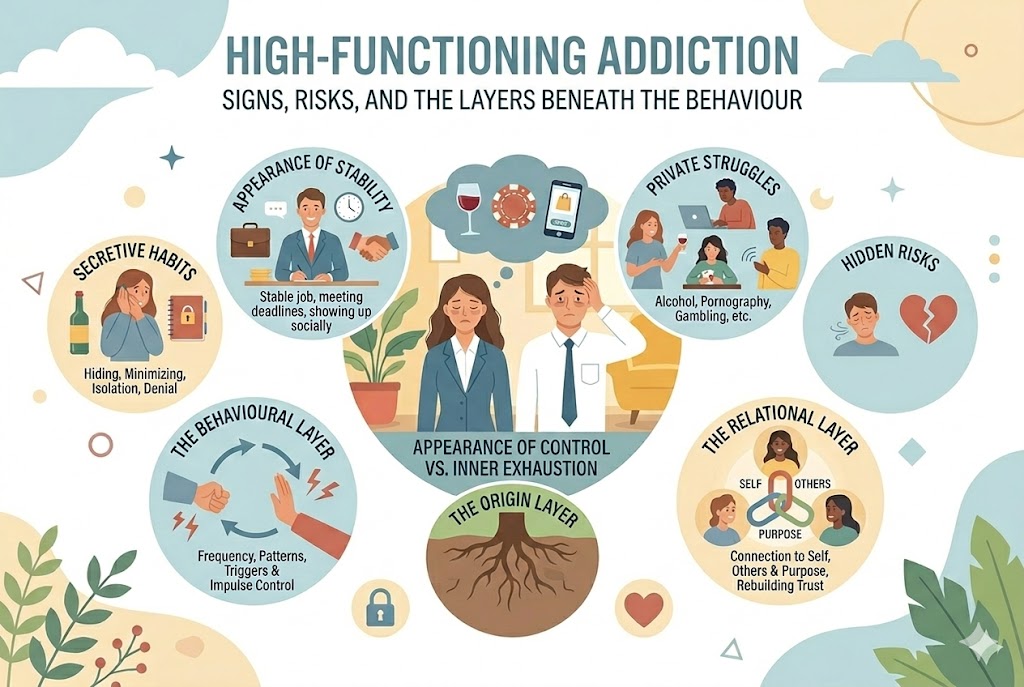
High-Functioning Addiction: Signs, Risks, and the Layers Beneath the Behaviour
5 March, 2026
Addiction isn’t always visible. Some individuals continue to work, parent, meet deadlines, and show up socially – all while privately struggling wi...
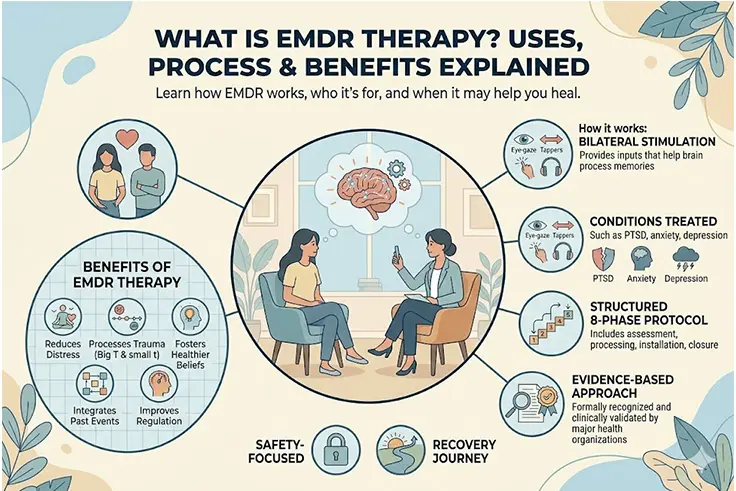
What Is EMDR Therapy? Uses, Treatment & Benefits Explained
2 March, 2026
What is EMDR therapy? EMDR (Eye Movement Desensitisation and Reprocessing) therapy is an evidence-based approach that helps individuals process and heal fr...

What to Do When Your Partner Refuses Couples Therapy
6 February, 2026
When a partner refuses couples therapy or a partner doesn’t believe in therapy, it can leave you feeling stuck, alone, and carrying the emotional weight ...

