Why Men Avoid Counselling and Why That Needs to Change
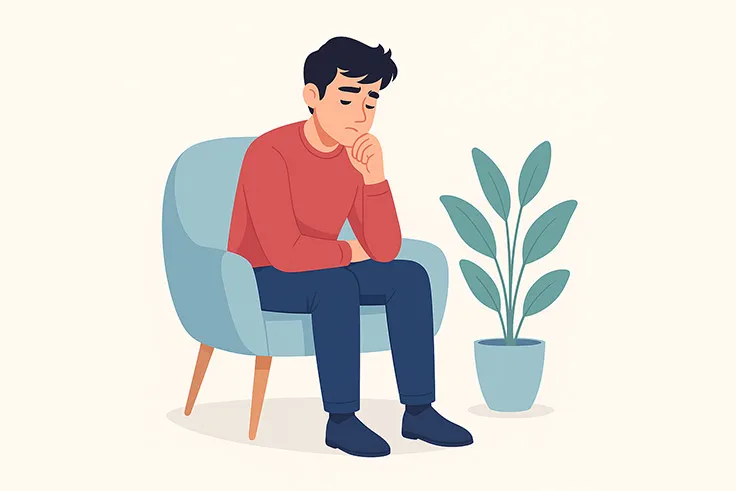
Meet Caleb, Caleb is a 38 year old father working in finance. He seems to have it all together, but feels overwhelmed and unable to disconnect from work stress. He keeps his worries to himself, feeling pressure always to stay strong and provide for his family. Like Caleb, many men silently struggle with their mental health, often avoiding conversations about their emotions. Around the world, many men share Caleb’s quiet struggles, believing they must stay strong and silent. Global surveys reveal a stark reality. Men are less likely to open up about their mental health and more likely to die by suicide than women. This disconnect between needing support and avoiding it is a serious issue, one we must address with empathy and understanding.
The Problem with Being Told to ‘Man’ Up
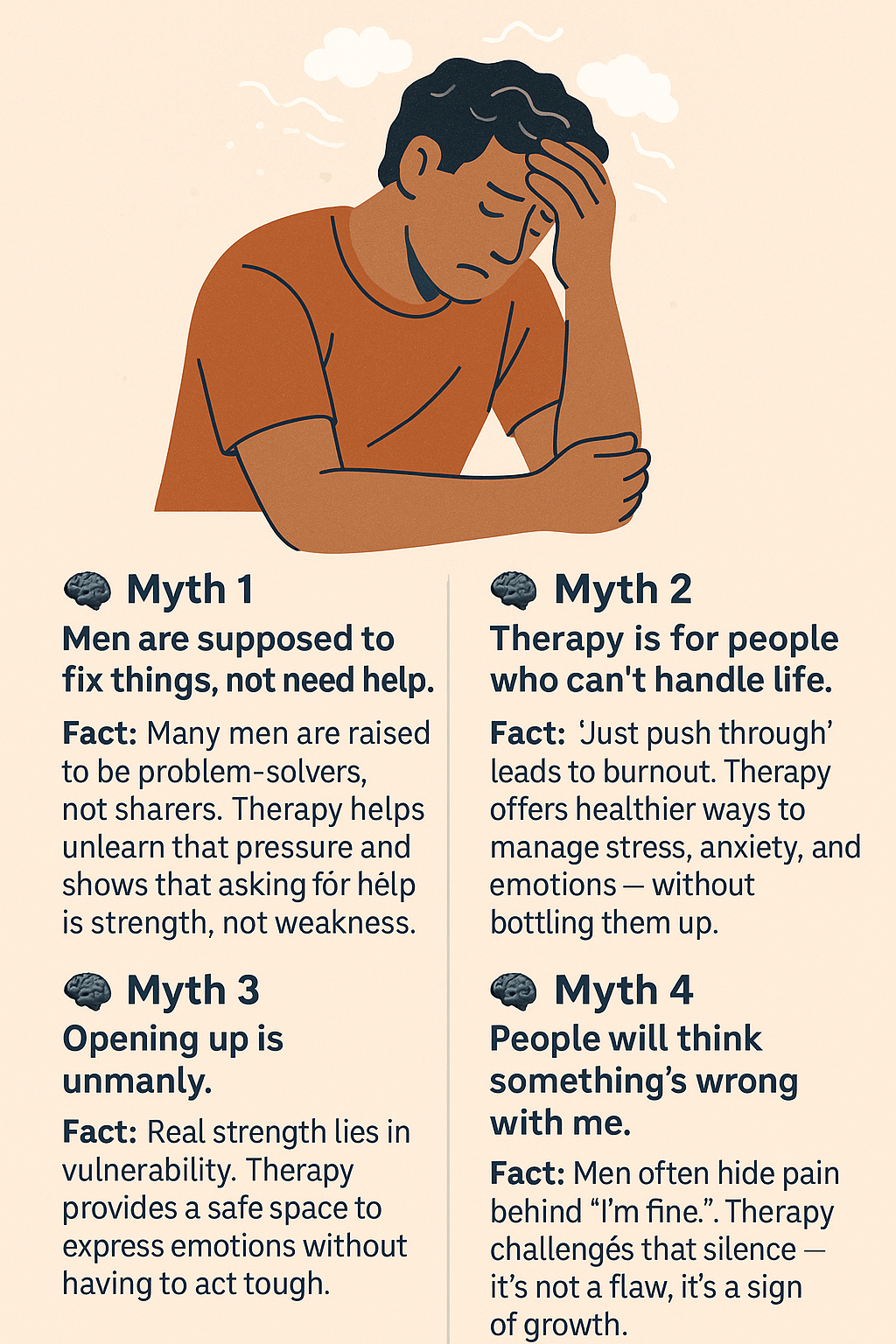
Did you know many boys grow up believing that showing emotion makes them weak? In reality, bottling up feelings can cause more harm in the long run, especially when men are taught to “man up” instead of open up.
From a young age, many boys are taught to suppress emotions and “man up,” creating pressure to appear strong and independent. By adulthood, men like Caleb often feel they must carry burdens alone, viewing stress or sadness as a sign of weakness. This leads many to struggle silently, turning to unhealthy coping methods like overworking or withdrawing. But avoiding emotions only deepens distress, straining relationships and fueling hopelessness.
Men’s reluctance to seek help isn’t due to a lack of feelings but because society discourages vulnerability. Many internalise the belief that needing support means weakness, making them less likely to reach out and more at risk of serious struggles. While self-reliance can be healthy, taken too far, it isolates men. The “man up” mindset harms not just men but those around them, and breaking this cycle is essential for the well-being of fathers, sons, brothers, and husbands like Caleb.
The Cost of Staying Silent and Why Change Is Needed
Holding everything inside doesn’t just make life difficult; it can be dangerous. Mental and emotional pressures that go unaddressed tend to build up. Over the years, Caleb’s constant stress and emotional suppression could lead to burnout or depression. Sadly, we see this reflected in wider society: men have a disproportionately higher risk of dire outcomes like suicide, in part because they are less likely to seek help early on. The World Health Organisation reports that men worldwide take their own lives at roughly twice the rate of women, which experts link to men’s lower engagement with mental health services. These are heartbreaking statistics behind the silent struggle.
Staying silent takes a toll on daily life. Men who avoid support often face irritability, health issues, and strained relationships. Caleb may think he is protecting his loved ones by keeping quiet, but unspoken stress only creates distance. True strength lies in seeking help, not in pretending everything is fine. It is time to challenge the idea that men must carry their burdens alone. Counselling can help by focusing on managing stress and emotions, improving relationships, and building problem-solving strategies that support real change in everyday life.
Counselling that works for you. Practical, real support for Men
One big misconception that keeps men away from counselling is the idea that Counselling is just about venting feelings or that it won’t offer practical solutions. In reality, good counselling is not about stripping away masculinity or endlessly analysing childhood. It’s about equipping men with useful tools to navigate life’s challenges. Counselling at Incontact is designed to be goal oriented and actionable, focusing on the issues men care about most. Incontact’s approach to men’s counselling is built around addressing the unique challenges that men face. This means that seeking help doesn’t make you any less of a man; it simply gives you more skills to be the problem-solver and provider you strive to be.
Counselling can feel very practical, like having a personal coach for your mental well-being. For example, an Incontact counsellor can work with you on concrete skills and strategies such as:
- Managing stress and emotions: Learning proven techniques to cope with stress, anger, and anxiety, so that intense emotions don’t overwhelm you. This might include stress management exercises or methods to cultivate calm under pressure.
- Improving relationships: Gaining tools to communicate better and resolve conflicts with your partner, children, or colleagues. Counselling offers guidance on expressing yourself openly and listening effectively, which can lead to stronger, healthier connections.
- Problem-solving strategies: Working collaboratively with your therapist on real-life challenges. Whether it’s figuring out how to balance work and family or breaking out of negative habits, counselling provides a structured space to brainstorm solutions and set achievable goals.
Counselling isn’t just talking; it’s personal growth. Many men appreciate its practical, action-focused approach. By the end, someone like Caleb feels emotionally lighter and gains the tools tools to manage stress and communicate more effectively. It is a smart and empowering way to build mental and emotional strength, much like exercising for physical health.
Counselling is your space to be real
Another barrier for many men is the fear of being judged, embarrassed, or misunderstood in Counselling. It takes courage to open up, and it’s hard to do if you feel the environment isn’t completely safe. Incontact’s trained counsellors understand these concerns deeply and work hard to create a safe, supportive space where men can talk freely. They know that even if a man isn’t outwardly emotional, it doesn’t mean he isn’t hurting. Whatever you want to discuss, whether it’s work stress, anger, intimacy issues, or something that feels “small,” you can expect to be heard with compassion and without judgment. In counselling sessions, everything you share is confidential, and you set the pace. If you’re not ready to dive into certain topics, that’s okay. Your counsellor will respect your comfort level. As Incontact puts it, in sessions, you have a private space to share your struggles without fear of criticism. This kind of trust is the foundation of effective Counselling.
When Caleb first walks into counselling, he may feel hesitant. But he soon realises the space is non-judgmental and focused on understanding, not interrogation. As trust builds, he opens up and begins to feel the relief of sharing what he has held in for so long. Counselling becomes a safe and respectful space where real growth begins, like finally setting down a heavy load he has carried alone.
Redefining Strength: Reaching Out Is Courage, Not Weakness
Encouraging men to try counselling means redefining what it means to be strong. Real strength is not struggling alone, but having the courage to seek support and take care of yourself. Men like Caleb often believe asking for help is a weakness, but facing challenges and using support is a powerful act of responsibility. Incontact reminds us that seeking help is a sign of strength and a step toward caring for yourself and those who matter most.
If you’ve been avoiding counselling or downplaying your pain, know that you’re not alone and that it’s never too late to step forward. Think of counselling as an investment in a healthier, clearer, more resilient you. It might feel daunting at first, but remember that asking for support is a sign of wisdom and bravery. It means you care about your life and those around you. For men like Caleb, making that first appointment can be a life-changing experience. It can mark the beginning of feeling genuinely heard, finding clarity, and rediscovering hope.
If you are a man silently struggling, consider counselling. It is not a sign of weakness, but rather a sign of strength, the strength to care for your mental well-being. Today’s masculinity embraces self-care, openness, and growth. You deserve the same support you would offer someone you care about.
At Incontact Counselling Singapore, we welcome you to a space where you can share your story without judgment and start finding the peace and confidence you deserve. Talking to someone is not a sign of weakness. It is a brave step toward a healthier life. Let us change the story so no one has to face their struggles alone.
- Medical News Today – Men’s mental health: ‘Man up’ is not the answermedicalnewstoday.com
- Sagar-Ouriaghli et al., 2019 – Improving Mental Health Service Utilization Among Men (King’s College London)pmc.ncbi.nlm.nih.govpmc.ncbi.nlm.nih.gov
Submit a Comment
Your email address will not be published. Required fields are marked *
Recent Blogs
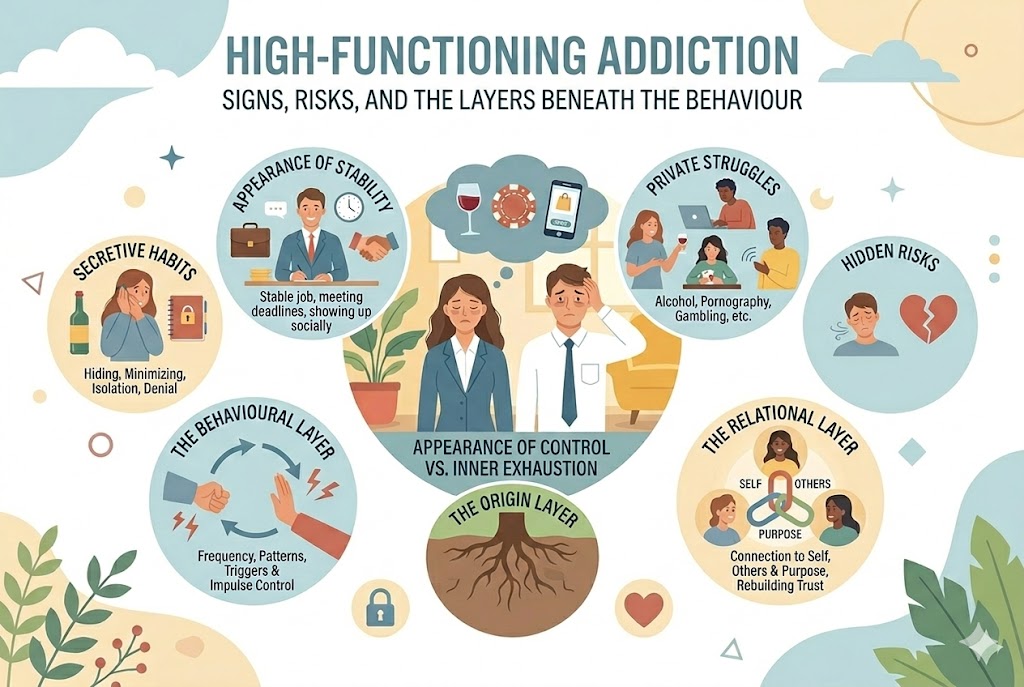
High-Functioning Addiction: Signs, Risks, and the Layers Beneath the Behaviour
5 March, 2026
Addiction isn’t always visible. Some individuals continue to work, parent, meet deadlines, and show up socially – all while privately struggling wi...
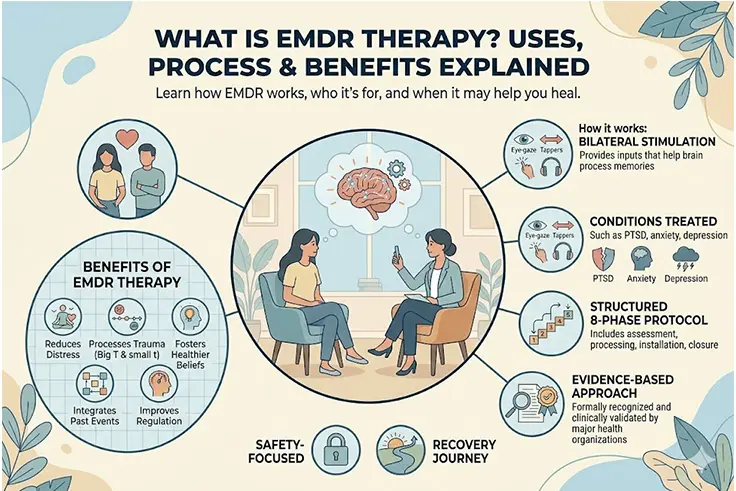
What Is EMDR Therapy? Uses, Treatment & Benefits Explained
2 March, 2026
What is EMDR therapy? EMDR (Eye Movement Desensitisation and Reprocessing) therapy is an evidence-based approach that helps individuals process and heal fr...
What to Do When Your Partner Refuses Couples Therapy
6 February, 2026
When a partner refuses couples therapy or a partner doesn’t believe in therapy, it can leave you feeling stuck, alone, and carrying the emotional weight ...

