Understanding the Sympathetic and Parasympathetic Nervous System: How Your Body Responds to Stress and Relaxation
Ever wonder why your heart races when you’re anxious, but you feel calm and sleepy after a relaxing afternoon? That’s the work of your body’s two nervous systems: the sympathetic and parasympathetic. Think of them as your body’s “on” and “off” switches for stress and relaxation. In this blog, we’ll explain how these systems impact your body and emotions, what happens when stress disrupts the balance, and how you can regain control. Through a day in the life of Amanda, you’ll see these responses in action and learn how self-awareness, simple relaxation techniques, and counselling can help you feel more at ease.
Your Body’s Journey: From Tension to Calm
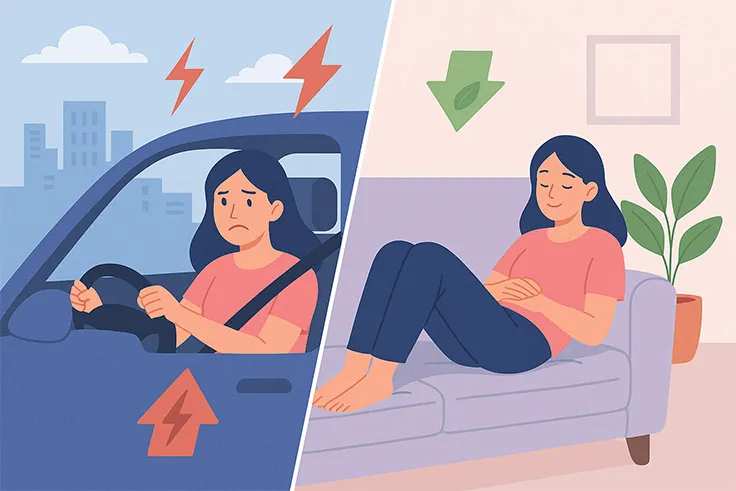
Meet Amanda, a working professional with a hectic schedule. This morning, she woke up late and got stuck in traffic on the way to an important meeting. Her heart races, her breathing quickens, her palms sweat, and her stomach knots up. Though it’s just traffic, her body reacts as if she’s in real danger. This is her internal fight or flight system kicking in. It’s meant for emergencies, but now gets triggered by everyday stress.
Later that day, Amanda finishes her meeting and returns home. She changes into comfortable clothes and takes a few deep breaths. Her heartbeat slows, her shoulders relax, and her appetite returns. This calm state is her body’s rest and digest mode, helping her unwind. Her parasympathetic nervous system is now in charge, allowing her to recover from the stress of the day.
Amanda’s day might sound familiar. We all experience these ups and downs. To understand what was happening in her body, let’s explore these two nervous systems in plain language.
What Are the Sympathetic and Parasympathetic Nervous Systems?

The sympathetic and parasympathetic systems are two parts of your autonomic nervous system which control functions like heart rate, breathing, and digestion. The sympathetic system acts like a gas pedal, giving your body energy to respond to stress. The parasympathetic system works like a brake, helping you calm down and recover. One prepares you for action, the other helps you rest and heal. Together, they keep your body balanced.
Both systems are crucial. They usually work hand-in-hand: when something stressful happens, the sympathetic system gets your body ready to act quickly in stressful situations, and when the stress is over, the parasympathetic system kicks in to help you recover. Let’s look a bit closer at each one.
Fight or Flight: Your Body’s Alarm System (Sympathetic)
The sympathetic nervous system (SNS) is your body’s built-in alarm and turbo boost. It evolved to protect us in dangerous situations. When the SNS fires up, it triggers what we know as the “fight or flight” response. Imagine back in prehistoric times, if you encountered a wild animal, this response would flood you with the energy to either fight for survival or run away fast.
In modern life, we rarely face real danger, but our bodies still react to stress the same way. When Amanda was stuck in traffic, her sympathetic nervous system kicked in. Her body released adrenaline, causing a racing heart, rapid breathing, tense muscles, and heightened alertness. She may have felt irritated or anxious, which are classic signs of the fight or flight response. This reaction happens quickly, often without us even noticing.
In the short term, the fight-or-flight response can be helpful, even life-saving. It gives you the extra boost to slam the brakes in traffic or ace that presentation. However, the SNS isn’t meant to stay on all the time. It’s supposed to fire up, then turn back off once the immediate threat passes. That’s where the other half of the equation comes in.
Rest and Digest: Your Body’s Calm Mode (Parasympathetic)
The parasympathetic nervous system (PSNS) is the counterpart to the fight-or-flight. You can think of the PSNS as your body’s “rest and digest” mode. It focuses on relaxation, healing, and maintaining normal functions when you’re safe.. If the sympathetic system is the alarm, the parasympathetic is the soothing lullaby that follows.
When Amanda relaxed on the couch, her parasympathetic system took over. It slowed her heart rate, eased her breathing, and restarted digestion, which explains the return of hunger or the urge to use the bathroom. In this state, the body heals, conserves energy, and regains balance. Amanda felt calm and grounded again after the stress of the morning.
The parasympathetic nervous system is often called our “built-in healing mode.” It’s crucial not just for resting in the moment, but for long-term well-being. When your PSNS is active, you might notice you can think more clearly, sleep better, and even connect with others easily because you’re not in survival mode. It’s during these rest-and-digest periods that your body restores itself.
Why it’s a problem when stress lingers
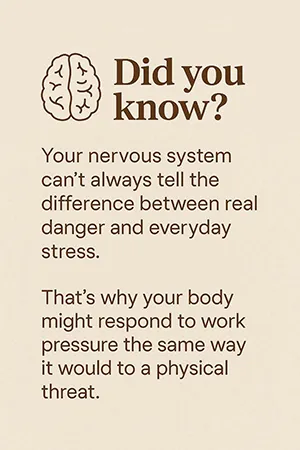
Life today can be full of constant mini “threats” like tight work deadlines, financial worries, endless emails, or the demands of caring for family. When stress is chronic, our sympathetic nervous system can get stuck in overdrive. It’s like a car engine that’s revving nonstop without a break. Over time, this revving takes a toll on our bodies and minds.
Experts note that prolonged stress creates a chronic imbalance in the nervous system, where the fight-or-flight side stays switched on too often while the rest-and-digest side gets suppressed. In Amanda’s case, if she has stressful traffic jams every morning and high pressure every day at work, her body might start to operate as if it’s always in an emergency. She might find it hard to fully relax.
Chronic stress keeps hormones like adrenaline and cortisol elevated, which can lead to high blood pressure, a weak immune system, headaches, insomnia, and digestive issues. It’s also linked to anxiety, depression, and difficulty concentrating. Emotionally, someone stuck in fight or flight may feel constantly on edge or experience mood swings. Over time, this ongoing state of alert can wear down the body and make it harder to relax.
In short, when we don’t get enough time in the calming parasympathetic state, our bodies don’t get to repair and recharge. You might start to notice you get sick more often, or you’re exhausted and anxious frequently. This state of imbalance is sometimes referred to as a dysregulated nervous system. The good news is that it’s possible to rebalance by gently tapping the brake and giving that gas pedal a rest..
How to shift back into calm mode
While you can’t eliminate all stress from life, you can help your body switch into its calm mode more often. Self-awareness is a great first step. Start paying attention to your body’s signals: Is your heart racing? Are your muscles tight? These can be clues that your sympathetic system is active. Simply recognising “I am in fight-or-flight right now” is useful. It reminds you to engage your coping tools.
To activate your parasympathetic system, try simple practices that signal safety to your brain. Deep, slow breathing is one of the most effective techniques, especially when you exhale longer than you inhale. Therapists often suggest techniques like this, along with muscle relaxation, meditation, yoga, or nature walks. These help shift your body into rest and digest mode. Over time, regular calming habits like a nightly wind-down or daily meditation can make it easier for your body to relax.
Lifestyle matters too. Getting good sleep, eating well, and staying active help your body manage stress better. Exercise burns off extra adrenaline and eases tension. Talking to someone you trust also helps. Feeling supported can shift your body from stress to calm. Research shows that relaxation techniques like deep breathing, meditation, or even prayer can reduce stress, and strong relationships act as a buffer during tough times.
Sometimes, stress can feel like too much to handle, even when you’re trying your best. If you often feel tense or anxious, talking to a therapist can make a real difference. Counselling can help you understand your stress, learn calming techniques, and gently uncover what’s keeping you stuck in that state. You deserve support, and you don’t have to go through it alone. Reaching out is a strong and healing step toward feeling better.
At Incontact Counselling , we understand how chronic stress and anxiety can leave you feeling wired yet exhausted. Our team of experienced, empathic counsellors is here to support you in finding your calm. We help clients explore their stress triggers and learn practical regulation tools to engage that parasympathetic “brake” when life gets tough. Through counselling, you can develop healthy stress-management habits and build emotional resilience. The goal is to help you feel more grounded and in control, rather than constantly on edge. Over time, with the right guidance, your body and mind can relearn that it’s okay to relax.
In conclusion, your body carries two quiet helpers. The fight or flight response protects you, and the rest and digest response helps you heal. When stress pulls you off balance, there are gentle ways to return. By noticing how your body feels, practising calming habits, and reaching out for support, you can find steadiness again. Over time, this brings more ease, better emotional health, and a deeper sense of peace. You don’t have to do it all alone. Your body already knows the way back to calm. With a little care, support, and kindness, you can get there.
- Harvard Health Publishing – Understanding the stress response: Explanation of fight-or-flight vs. rest-and-digest and effects of chronic stress
- Integrated Listening – Understanding and treating a dysregulated nervous system: Tips on relaxation techniques and seeking support to rebalance the nervous system
- Harvard Health Publishing – Techniques to counter chronic stress: Research-backed methods like deep breathing, exercise, and social support for stress relief
Submit a Comment
Your email address will not be published. Required fields are marked *
Recent Blogs
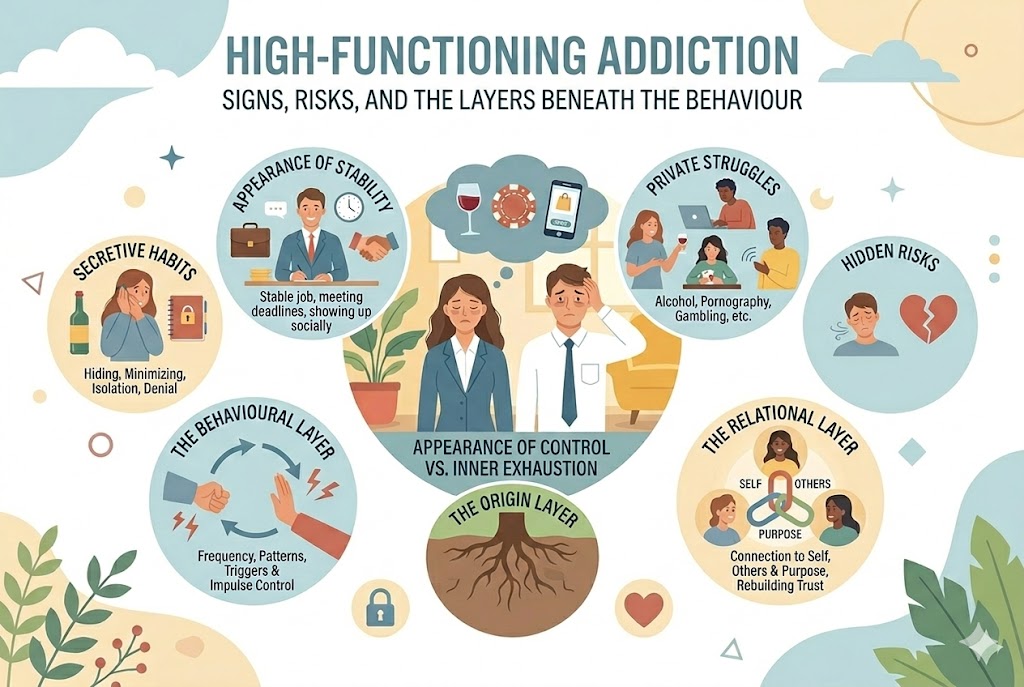
High-Functioning Addiction: Signs, Risks, and the Layers Beneath the Behaviour
5 March, 2026
Addiction isn’t always visible. Some individuals continue to work, parent, meet deadlines, and show up socially – all while privately struggling wi...
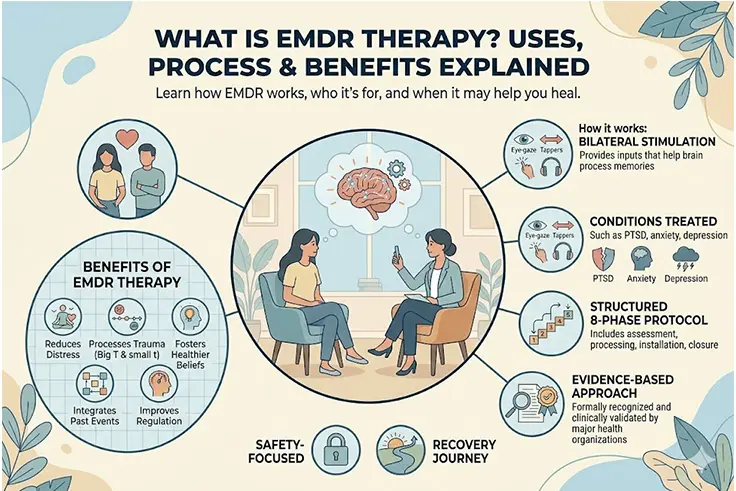
What Is EMDR Therapy? Uses, Treatment & Benefits Explained
2 March, 2026
What is EMDR therapy? EMDR (Eye Movement Desensitisation and Reprocessing) therapy is an evidence-based approach that helps individuals process and heal fr...
What to Do When Your Partner Refuses Couples Therapy
6 February, 2026
When a partner refuses couples therapy or a partner doesn’t believe in therapy, it can leave you feeling stuck, alone, and carrying the emotional weight ...

