What Is EMDR Therapy? Uses, Treatment & Benefits Explained
What is EMDR therapy?
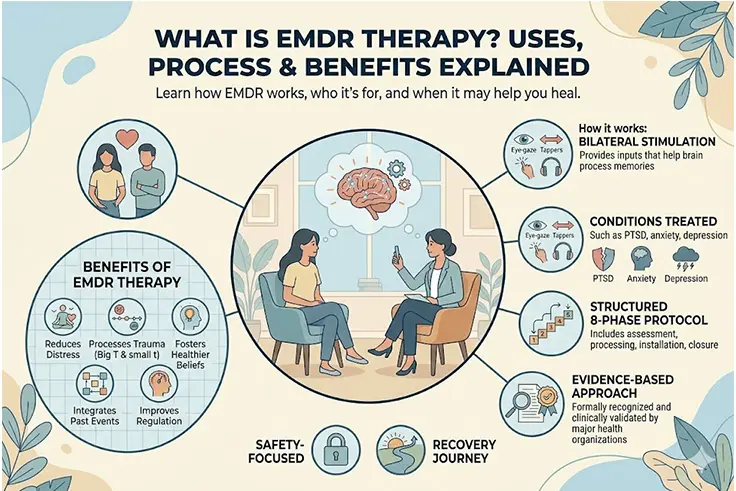
EMDR (Eye Movement Desensitisation and Reprocessing) therapy is an evidence-based approach that helps individuals process and heal from both major traumas (Big T) and distressing life events (small t). When difficult experiences remain unresolved, they can continue to trigger intense emotional and physical reactions, affecting daily life.
Unlike traditional talk therapy, EMDR focuses on reprocessing these memories at a neurological level. Through guided eye movements or other forms of bilateral stimulation, your brain is supported in reprocessing distressing events so they no longer hold the same emotional intensity. This allows you to integrate past experiences more healthily and move forward with greater ease.
Who Needs EMDR Therapy?
EMDR therapy may be helpful for people who feel emotionally affected by past experiences, even if those experiences happened long ago.
You may consider EMDR counselling if you:
● Have experienced trauma, accidents, or abuse
● Feel intense emotional reactions that seem out of proportion to the present situation
● Struggle with anxiety linked to past events
● Notice recurring distressing memories, images, or dreams
● Feel “stuck” despite trying other forms of therapy
EMDR therapy is not only for people with severe trauma. Many individuals seek EMDR therapy, which is used for everyday emotional distress that continues to affect their current lives.
Why Is EMDR Therapy Used?
EMDR therapy doesn’t require talking in detail about a distressing issue. EMDR instead focuses on changing the emotions, thoughts or behaviours that result from a distressing experience (trauma). This allows your brain to resume a natural healing process. While many people use the words “mind” and “brain” when referring to the same thing, they’re actually different. Your brain is an organ of your body. Your mind is the collection of thoughts, memories, beliefs and experiences that make you who you are.
The way your mind works relies on the structure of your brain. That structure involves networks of communicating brain cells across many different areas. That’s especially the case with sections that involve your memories and senses. That networking makes it faster and easier for those areas to work together. That’s why your senses — sights, sounds, smells, tastes, and feels — can bring back strong memories.
What Conditions and Problems Does EMDR Treat?
The most widespread use of EMDR is for treating post-traumatic stress disorder (PTSD). Mental healthcare providers also use it in the treatment of the following conditions:
● Anxiety disorders: Generalised anxiety disorder, panic disorder, phobias and social anxiety/phobia.
● Depression disorders: Major depressive disorder, persistent depressive disorder, and illness-related depression.
● Dissociative disorders: Dissociative identity disorder, or amnesia, depersonalization or derealization disorder.
● Eating disorders: Anorexia nervosa, bulimia nervosa, and binge-eating disorder.
● Obsessive-compulsive disorders: Obsessive-compulsive disorder (OCD), body dysmorphic disorder and hoarding disorder.
● Personality disorders: Borderline personality disorder, avoidant personality disorder and antisocial personality disorder.
● Trauma disorders: Acute stress disorder, PTSD and adjustment disorder.
The EMDR Therapy Process: Step-by-Step
EMDR therapy follows a structured 8-phase protocol, including:
● History taking
● Preparation
● Assessment
● Desensitisation
● Installation
● Body scan
● Closure
● Revaluation
Each step ensures safety and therapeutic progress.
How Common Is EMDR Therapy?
EMDR therapy is widely practised worldwide and used in hospitals, clinics, and private practices.
It is recognised by many international mental health organisations and has been studied extensively over several decades. EMDR counselling is now part of standard trauma-informed care in many countries.
Its structured approach and focus on safety have contributed to its growing acceptance among mental health professionals.
What To Know Before Trying EMDR Therapy
Before starting EMDR therapy, understand that it’s designed to help process traumatic memories through guided eye movements. Be prepared for emotional discomfort as past traumas are revisited. Ensure your therapist is trained and licensed in EMDR. It’s essential to discuss your history and concerns with your therapist to tailor the approach to your specific needs.
When Should I Get Emergency Medical Care?
You should get emergency care if you have disturbing thoughts about harming yourself, including thoughts of suicide, or about harming others. If you have thoughts like this, you can call any of the following:
● Suicide and Crisis Lifeline (Singapore). To call this line, dial 995.
● Local crisis lines. Mental health organisations and centres in your area may offer resources and help through crisis lines.
● 1777 (or your local emergency services number):
A Note from Incontact Counselling
At Incontact Counselling, we believe emotional healing happens best when it is paced, safe, and tailored to the individual.
EMDR therapy is offered with careful assessment, clear explanation, and ongoing support. Every EMDR session is guided by professional training and ethical practice, with your well-being as the priority.
If you are exploring EMDR therapy used for trauma, anxiety, or emotional distress, know that support is available, and healing does not need to be rushed.
Submit a Comment
Your email address will not be published. Required fields are marked *
Frequently Asked Questions
EMDR (Eye Movement Desensitisation and Reprocessing) is a therapy that helps the brain process distressing memories so they feel less emotionally overwhelming. A therapist guides you to briefly recall a difficult memory while using bilateral stimulation, such as eye movements or gentle tapping, helping reduce emotional intensity. At Incontact Counselling, EMDR is provided in a safe and supportive setting.
EMDR may not be suitable for individuals who are currently in acute crisis, experiencing unmanaged psychosis, severe dissociation, or active substance dependence. It may also be delayed if someone lacks emotional stability or safe coping skills. A trained therapist will always assess readiness before beginning EMDR to ensure it is safe and appropriate.
EMDR should not be done on your own. It is a structured therapy that requires guidance from a trained professional to ensure emotional safety and proper processing. Attempting EMDR without support can feel overwhelming and may not be effective.
Recent Blogs
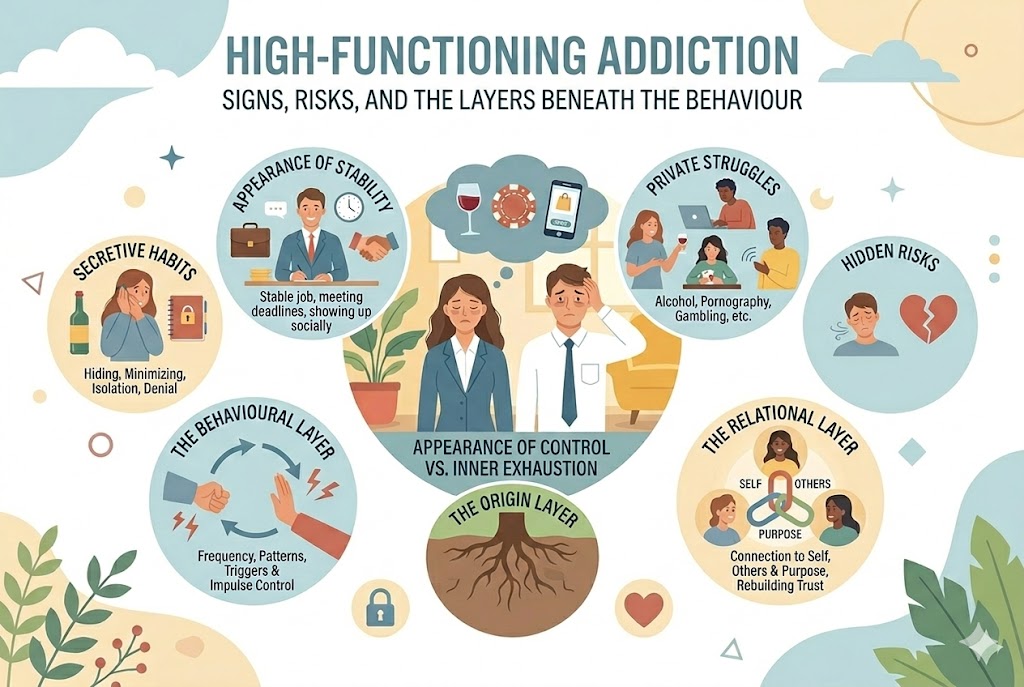
High-Functioning Addiction: Signs, Risks, and the Layers Beneath the Behaviour
5 March, 2026
Addiction isn’t always visible. Some individuals continue to work, parent, meet deadlines, and show up socially – all while privately struggling wi...
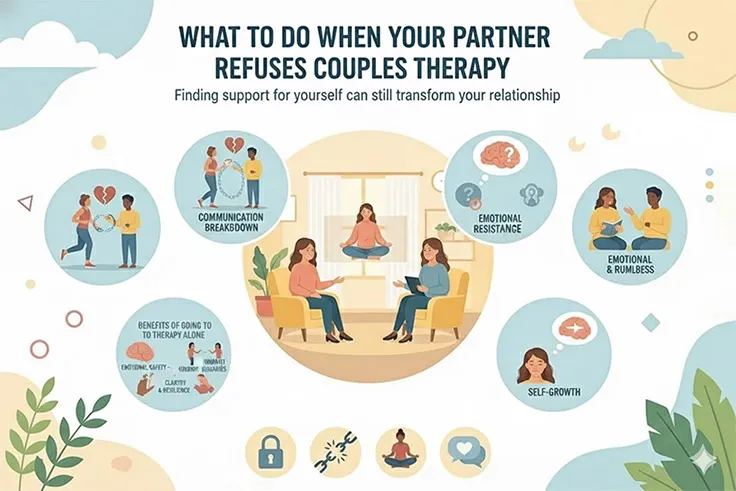
What to Do When Your Partner Refuses Couples Therapy
6 February, 2026
When a partner refuses couples therapy or a partner doesn’t believe in therapy, it can leave you feeling stuck, alone, and carrying the emotional weight ...
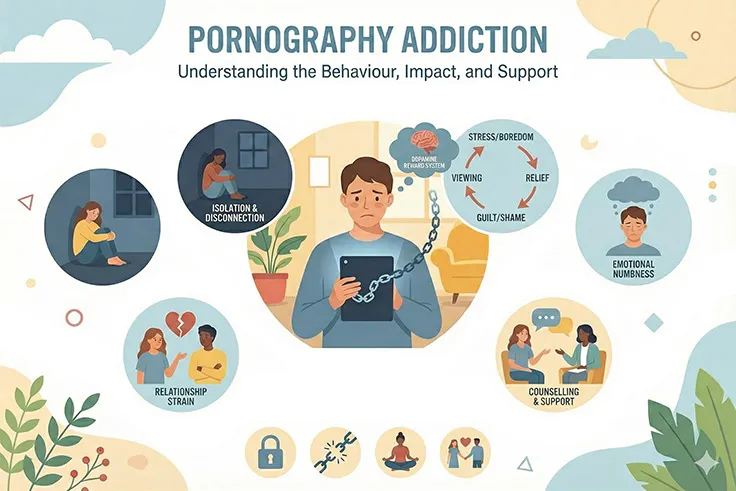
Pornography Addiction: Understanding the Behaviour, Impact, and Support
5 January, 2026
What is porn addiction? Porn addiction describes a situation where someone feels unable to control their use of pornography, even when it starts affecting ...

