What to Do When Your Partner Refuses Couples Therapy
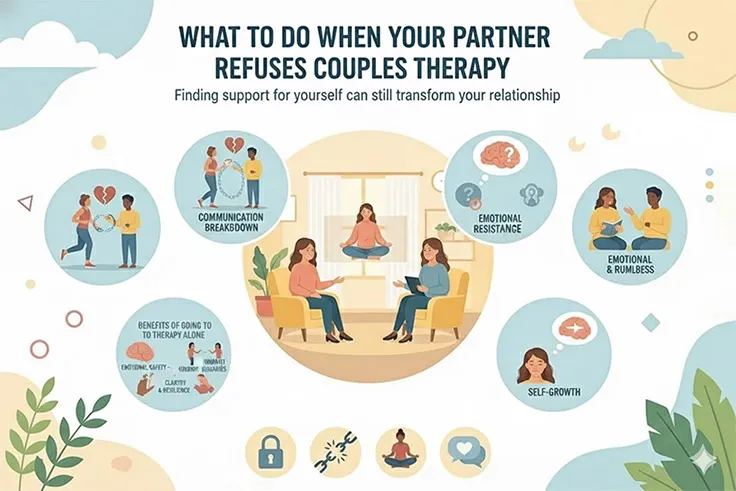
When a partner refuses couples therapy or a partner doesn’t believe in therapy, it can leave you feeling stuck, alone, and carrying the emotional weight of the relationship by yourself. This situation often creates a painful communication breakdown, where concerns go unheard, and the connection feels harder to maintain.
In many cases, this resistance isn’t about unwillingness to work on the relationship. It’s rooted in emotional resistance, fear of vulnerability, or discomfort with confronting deeper issues. Still, when one partner avoids therapy, the other is often left managing the emotional labour, questioning whether change is even possible.
The important thing to know is this: meaningful change can still begin even if your partner isn’t ready.
Benefits of Going to Therapy Alone for a Relationship
Going to therapy alone for a relationship is not a sign of giving up. It’s an act of personal healing and self-respect. Individual therapy offers mental health support that helps you understand your role within the relationship while protecting your own emotional well-being.
Individual therapy can support you by:
- Restoring emotional safety
A therapist provides a neutral space to process frustration, sadness, or resentment without judgment, helping you feel grounded again.
- Understanding relationship dynamics
Therapy helps you recognise recurring relationship patterns, including how different attachment styles influence closeness, conflict, and emotional distance.
- Reducing conflict and improving communication
As you become more emotionally regulated, your approach to conflict resolution often becomes calmer and clearer, even when your partner hasn’t changed.
- Clarifying boundaries in relationships
Therapy supports healthy boundaries in relationships, allowing you to protect yourself without escalating tension or withdrawing emotionally.
- Encouraging self-growth and self-reflection
Through guided self-reflection, you gain insight into what you need, what you can control, and how to move forward with greater confidence.
Why Individual Therapy Still Helps When Your Partner Says No
When a partner doesn’t believe in therapy, the relationship can feel stalled. But therapy doesn’t only work through joint sessions, it works through shifts in emotional awareness, behaviour, and regulation.
As you engage in individual therapy, you may notice:
- Less emotional reactivity
- Greater clarity in decision-making
- Improved emotional resilience
- A healthier balance between connection and independence
Over time, these changes can subtly influence relationship dynamics, sometimes making the relationship feel safer and occasionally increasing a reluctant partner’s openness to support.
A Gentle Reminder
You can respect your partner’s choice while still caring for yourself. Seeking therapy on your own is not about fixing your partner; it’s about self-growth, emotional stability, and breaking unhelpful relationship patterns.
Incontact Counselling offers a safe, confidential space to explore these challenges, support your personal healing, and help you navigate complex relationship concerns, whether or not your partner is ready to attend therapy.
Submit a Comment
Your email address will not be published. Required fields are marked *
Frequently Asked Questions
Yes. Resistance is common and often linked to fear, stigma, or misunderstanding.
Absolutely. Individual therapy often leads to emotional clarity and better communication.
Repeated pressure can increase resistance. Focus on expressing needs and setting boundaries.
Not necessarily. Many people care deeply but feel overwhelmed by the idea of therapy.
Discuss session options, pacing, or starting individually. Many Singapore clinics are transparent about fees.
Recent Blogs
High-Functioning Addiction: Signs, Risks, and the Layers Beneath the Behaviour
5 March, 2026
Addiction isn’t always visible. Some individuals continue to work, parent, meet deadlines, and show up socially – all while privately struggling wi...
What Is EMDR Therapy? Uses, Treatment & Benefits Explained
2 March, 2026
What is EMDR therapy? EMDR (Eye Movement Desensitisation and Reprocessing) therapy is an evidence-based approach that helps individuals process and heal fr...
Pornography Addiction: Understanding the Behaviour, Impact, and Support
5 January, 2026
What is porn addiction? Porn addiction describes a situation where someone feels unable to control their use of pornography, even when it starts affecting ...

